
On 13 November 2015, France was playing Germany at the Stade de France. At 9:25 pm, François Molins was getting ready for bed. He had just come back from a counter-terrorism summit in Morocco and he was exhausted. Then his phone rang: an explosion outside the stadium, gate D. A few minutes later, the news channels were reporting shootings on café terraces in Paris's 11th arrondissement. He understood that Paris was under a coordinated attack.
Five crisis management lessons from that night, in short:
- Have a crisis plan that everyone knows and has tested, before you need it.
- Delegate: keep the big decisions, let the team run the rest.
- Absorb the pressure from banks, shareholders and the board, so the team can work.
- Communicate first, and at fixed times, before others speak for you.
- Debrief afterwards, and look after the people who carried the load.
What happened on 13 November 2015
Three Islamic State teams struck Paris that evening: suicide bombers outside the national stadium, gunmen firing on packed café terraces, and a hostage-taking at the Bataclan concert hall. 130 people were killed and more than 400 injured. The November 2015 Paris attacks remain the deadliest attack on French soil since the Second World War.
François Molins was the Paris public prosecutor from 2011 to 2018. In France, the prosecutor leads criminal investigations and is the only official allowed to speak publicly about them. That made him, for many French people, the face of those years: he was the one explaining the facts at press conference after press conference, after the Toulouse and Montauban shootings in 2012, the Charlie Hebdo attack in January 2015, and then the Bataclan. He later became Prosecutor General at the Court of Cassation, the highest prosecutorial office in France, until his retirement. As Christophe Ragot recalled when introducing him, he also oversaw complex financial cases such as Bygmalion, Cahuzac and the Tapie affair.
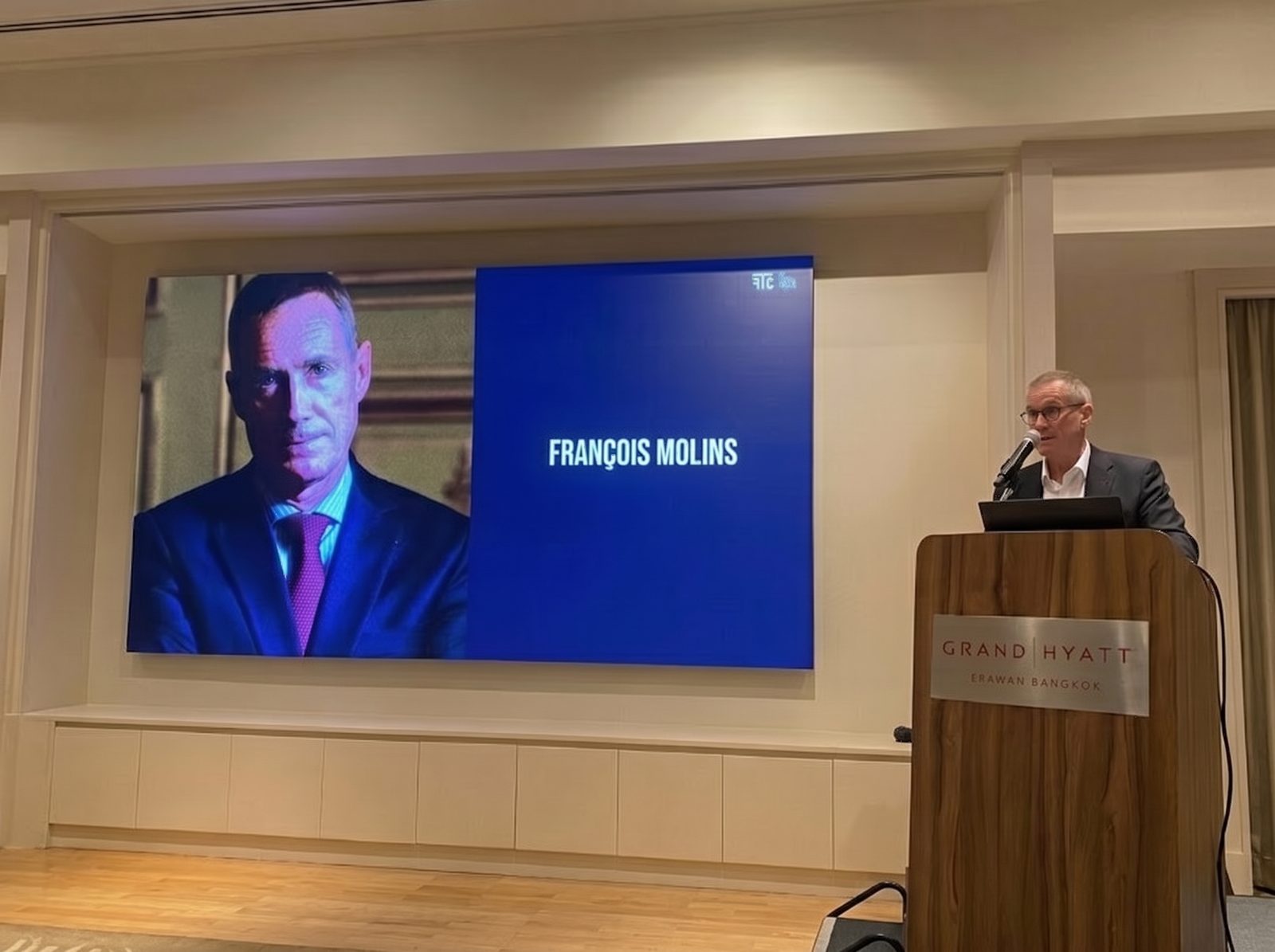
François Molins in Bangkok
On 15 October 2026 he was the guest speaker at The French Catalyst, the executive lunch club Christophe Ragot runs in Bangkok. On his first trip to Southeast Asia, he chose to talk about crisis management to a room of business leaders. He said it upfront: the justice system and business have little in common, except when trouble comes. And he presented his experience not as a model, but as food for thought for anyone who leads a team.
Why crisis management matters to a CFO
I have been a CFO in Asia for more than twenty years, and today I work as a fractional CFO for SMEs and regional groups. People rarely call me when things are going well. They call when cash gets tight, when the bank starts asking questions, when the auditor finds something. In short, when things heat up.
He was the one who drew the parallel with business, several times. His lessons were aimed squarely at the executives in the room. All I add here is what they look like on the finance side, in the companies I work with.
The first hour: go and get the information
His first reflex that night was to get as much information as possible, as fast as possible, and to cross-check it. He called the head of his counter-terrorism section, then the head of domestic intelligence; neither knew much more. He turned on a news channel and, a minute or two later, saw the first reports of shootings on café terraces. He could have stayed at home and waited for reports to come up the chain. He chose to go to the scene instead, because, as he put it, the faster information travels, the more fragmentary and inaccurate it is. About half an hour after the first explosion, from the car, he had activated the crisis cell and assigned the case to the counter-terrorism prosecutors.
How I apply it. This is the first thing I do with any new client, in a crisis or not. I do not wait for the information to come to me, and I do not start from the management report. I go to the raw data: bank statements, the general ledger, the receivables and payables listings, the contracts. That is what the free financial health check is for and, for a foreign-owned company, the subsidiary finance review. Often the reporting is right. Sometimes it is not, and the only way to know is to tie it back to the bank and the ledger. Until I have done that, I do not trust any number, however polished the dashboard. In a cash crisis, the logic is the same from day one: log into the bank portals yourself, call the two or three customers who owe the most, and build a first cash position from the raw data the same day, even a rough one, rather than wait for last week's report.
1. Have a crisis plan before the crisis
What kept the prosecutor's office standing that night was a crisis plan everyone knew and had already used. It had been activated twice before. A list of 36 prosecutors who could be called back at any hour, a room organised like a military command post, a single phone number for the police, hospitals and public transport. And after every activation, a debrief to fix what had gone wrong. After Charlie Hebdo, for example, the debrief showed that every detective was focused on the investigation and nobody was really looking after the victims, so the police appointed officers whose only job was to support them.
What I see in companies. Few SMEs have a crisis plan for their finances. When one exists, it is usually because a regulator or a bank asked for it, and it sits in a drawer. The day an account is frozen or a fraudulent transfer goes out, nobody knows who holds the bank access, who can stop a payment, or where the backups are. After a hack with no usable backup, a company can still know how many customers it has, but no longer who owes it what.
2. Delegate instead of taking everything back
This was the part that struck me most. The Paris prosecutor's office, he explained, works a bit like an SME: 135 prosecutors and 300 staff, used to working with a lot of autonomy. In the middle of the crisis, the instinct would have been to centralise everything. Molins chose not to. The counter-terrorism section kept control of its work, he only took the big decisions, and he stayed present for eleven days straight, ready to step in when something went off track. He compared it to a mountain rope team, and said a company in crisis is much the same: the lead climber opens the route and makes the calls, but goes nowhere without the others. For him, a leader's first quality is the ability to decide in the face of uncertainty, then to own the decision, and to lead by example. The team, in turn, rose to the occasion: he described a kind of collective courage, where everyone's expectations of each other lifted the whole team.
What I see in companies. Often the opposite. When cash gets tight, the owner wants to approve every single payment. Two weeks later, the finance team no longer dares to decide anything, suppliers are waiting, and the owner spends his days on bank transfers instead of talking to his bank. My advice is almost always the same: keep three or four decisions for yourself (which suppliers get paid first, the banking relationship, payroll), and let the team handle the rest.
3. Absorb the pressure from banks and shareholders
Molins kept the most sensitive topic for himself: the politicians. On top of the normal reporting line, he briefed the Justice Minister directly, regularly and precisely. She could see things were holding, and she let his team work.
What I see in companies. In a company, the politicians are the banks, the shareholders and the board. Too often they hear bad news late, and from someone else. That is where trust is lost, far more than on the numbers themselves. A banker told early, with a plan, becomes an ally. A banker caught by surprise becomes a problem. In a crisis, it is the owner's or the CFO's job to stand between those stakeholders and the team, so the team can work.
4. Communicate before others speak for you
For Molins, staying silent is always an option, but rarely the right one: the press will write anyway, and often get it wrong. He had a prosecutor at his side whose only job was the media. News agencies first, then the 24-hour news channels, then everyone else. And when the volume became unmanageable, one press briefing at a fixed time. His communications lead stayed at his side, often in the crisis room, because to communicate well you have to be close to the person deciding and close to the events. And the rules were strict: say as much as possible without saying too much, respect the victims, and never disclose anything that could harm the investigation.
What I see in companies. Silence is the most common reaction, and the most expensive. Staff imagine the worst, suppliers shorten payment terms, rumours spread. Molins's method translates well: tell the people who can cut your funding first (lenders, key suppliers), then your teams. And set a fixed appointment, a cash update every Monday for example, rather than answering every worry as it comes. And the person who talks to the bank or the staff should sit next to whoever makes the decisions, so the company never promises what it cannot deliver.
5. Debrief and look after the team
Once the crisis was over, Molins arranged for a psychologist to see his prosecutors. He went first, so nobody would feel ashamed to go. About ten colleagues followed. And there was always a debrief, even if, as he admits, the nasty surprises always come from where you were not looking.
He also spoke about emotions. He has always accepted having them: in his view, a leader without emotions would be dangerous, because he would no longer feel what is going on. The challenge is to channel them so they do not cloud decisions. What helped him hold was not being alone: his family's support, and the team. One last detail struck me. Afterwards, the hardest people to manage were those who had not been on the crisis list, and who took it badly that they had not been mobilised alongside their colleagues.
What I see in companies. When the crisis is over, everyone wants to move on. Nobody takes two hours to ask what went wrong, so the same mistakes come back the following year. And the finance team, after weeks of late nights and weekends, is often the one that cracks a few months later. A simple debrief and a genuine thank-you cost very little. And do not forget those who were not in the war room: they need to hear what happened too.
A finance crisis plan in one page
You do not need a fifty-page binder. One page that answers these six questions already goes a long way:
- Bank access. Who holds the tokens and approval rights for each bank account, and who is the backup if that person is away?
- Stopping a payment. Where are the bank's fraud hotline numbers and the steps to recall a transfer, written down so the team can find them at 7 am?
- Backups. Where are the accounting data and the receivables ledger backed up, and when was a restore last tested?
- Cash visibility. Is there an up-to-date 13-week cash forecast, so you know how many weeks you have, not just today's balance?
- Who calls whom. One person for the bank, one for key suppliers, one for the team, and a fixed time for updates.
- Decision rights. Which three or four decisions does the owner keep, and what can the team decide alone?
The question to ask yourself
I will leave you with the question I asked myself walking out of that lunch: if your bank froze your accounts tomorrow morning, who would do what in the first hour?
If the answer is not obvious, it is a conversation I have with business owners all the time. Book a free financial health check or get in touch.
Thank you to Christophe Ragot and The French Catalyst for the invitation, and to François Molins for the candour of his account.
This article reflects my own notes and understanding of François Molins's talk at The French Catalyst in Bangkok on 15 October 2026. It is not a transcript and does not speak for him or for the organisers.
Jerome Le Louer is Managing Partner of SmeCFO Asia, a fractional and interim CFO practice serving international companies across Thailand, Singapore, Hong Kong, Vietnam, Indonesia and the Philippines. He can be reached at [email protected].